
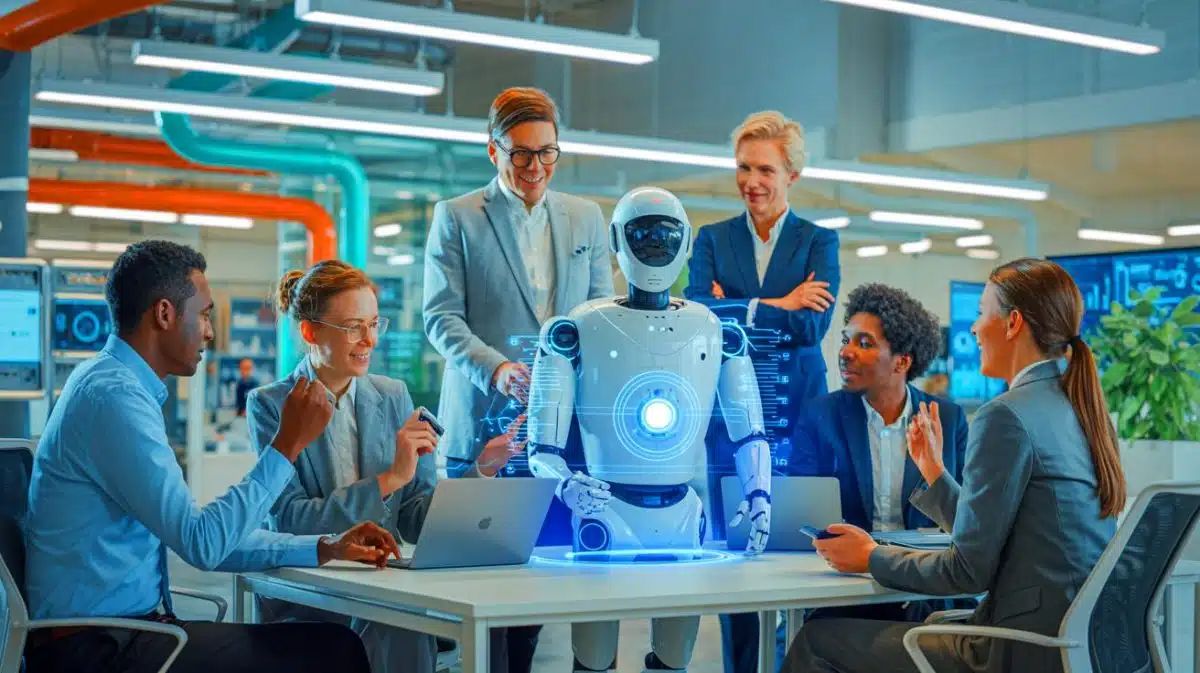
Dramatic Shift in American Workplace
Google’s latest DORA research reveals a transformative trend in U.S. tech employment: 9 out of 10 tech professionals now use AI tools in their daily work. This represents a significant 14% increase from last year, marking a fundamental change in how Americans work.
Work revolution: Google reveals 90% of professionals are already using AI daily – are you one of them?
Gigantic 400-meter structures discovered beneath Antarctic ice spark heated debate among scientists worldwide
The study, based on 5,000 responses worldwide, highlights America’s rapid adoption of AI technology in professional settings.
Impact on U.S. Job Market
The surge in AI adoption comes amid growing concerns about American employment prospects, particularly for entry-level positions. Recent data from The New York Fed shows computer science graduates facing higher unemployment rates than traditional liberal arts majors.
Job listings for software engineering positions have plummeted by 71% between February 2022 and August 2025, raising questions about the future of tech employment.
Google’s AI Integration
Ryan J. Salva, Google’s coding tools chief, reports widespread AI adoption within the company. “If you’re an engineer at Google, AI is now unavoidable in your daily work,” he states, highlighting how AI has become integrated into everything from documentation to code editing.
American tech giants, including Microsoft, OpenAI, and Anthropic, are competing intensely in this growing market.
Trust and Effectiveness
American tech workers show mixed feelings about AI reliability:
- 46% somewhat trust AI-generated code
- 23% have limited trust
- 20% strongly trust the technology
- 31% report slight improvements in code quality
- 30% see no significant impact
Future of American Tech Jobs
While some industry leaders, like Anthropic CEO Dario Amodei, warn about potential job displacement, others see AI as complementary to human skills. Salva suggests that critical aspects of software development will remain human-driven, with AI handling routine tasks.
The technology’s adoption appears partly driven by industry trends, with Salva noting, “Software development is a fashion industry… everyone’s excited to try the new thing.”
A YouTuber bought a Bugatti on TEMU expecting luxury… but the unboxing went terribly wrong
Colonizing Mars is no longer a dream: Elon Musk unveils a historic deadline that will change everything
Conclusion
As AI transforms the American tech landscape, workers and companies are adapting to new realities. While challenges exist, particularly for new graduates, the technology appears to be enhancing rather than replacing human capabilities. The key for American workers will be learning to effectively integrate AI tools while maintaining essential human oversight and creativity in their work.
Similar Posts
- The Founder Of Google Entrusted Elon Musk With €110 Billion… Before Abruptly Severing All Ties. What Really Happened?
- A Google Employee Earning $300,000 A Year Resigns For A Surprisingly Simple Reason
- Revolutionary AI Narration by ElevenLabs: Upgrade Now for an Enhanced 5-Minute Listen!
- 800 applications rejected: how a star programmer earning $11,000 a month, victim of AI, lost everything and now lives in a trailer
- Google Unveils AR Glasses Prototype: Revolutionizing Visual Tech!

Maria Popova navigates as a journalist on the pulse of hot news and emerging trends in the United States. With a sharp sense for what’s shaping the cultural and social zeitgeist, she decodes viral moments, digital shifts, and lifestyle changes that resonate with modern readers. Her writing captures the now — fresh, fast, and thought-provoking.
Maria.Popova@meadecountymessenger.com


