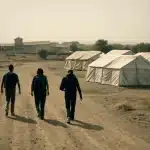
In recent developments, the dynamics of Syrian refugees returning to their homeland have seen a significant shift, with over 400,000 individuals making the journey back from Turkey since the political upheaval in December. This movement, accelerated during the summer months, signals a tentative step towards stability, despite the ongoing challenges within Syria.
Work revolution: Google reveals 90% of professionals are already using AI daily – are you one of them?
Gigantic 400-meter structures discovered beneath Antarctic ice spark heated debate among scientists worldwide
### The Return from Turkey
Turkey, which once sheltered up to 3.7 million Syrian refugees—the highest in the world—now hosts approximately 2.5 million, following the return of many to Syria. The Turkish Interior Ministry detailed that the returnees number 411,649, with a notable spike of almost 140,000 since mid-June. This reverse migration suggests a complex interplay of hope, necessity, and geopolitical calculations.
### A Comparative Perspective: Germany
Shifting focus to Europe, Germany’s scenario starkly contrasts with Turkey’s. Only about 4,000 Syrian refugees have opted to return from Germany, a figure that includes 1,337 who left under a voluntary departure program by the end of July. This discrepancy highlights diverse socio-political landscapes and the personal security assessments made by refugees in different host countries.
### Ongoing Concerns in Syria
Despite the returnee wave, Syria’s internal situation remains precarious. Recent weeks have witnessed violent clashes between various factions and attacks on religious minorities, casting doubt on the new Islamist government’s ability to stabilize the nation and protect its diverse populace. These developments continue to stir concerns about safety and human rights under the current regime.
### Political Repercussions and International Observations
In Germany, the political response has been cautious. The German Federal Ministry of the Interior, closely monitoring the situation, underscores the instability in Syria. Efforts are ongoing to repatriate Syrian criminals, aligning with agreements made by the ruling coalition. This approach reflects a broader, meticulous strategy towards asylum claims, reserved now for particularly exceptional cases due to the opaque political climate in Syria.
A YouTuber bought a Bugatti on TEMU expecting luxury… but the unboxing went terribly wrong
Colonizing Mars is no longer a dream: Elon Musk unveils a historic deadline that will change everything
### UNHCR’s Viewpoint
On a hopeful note, Filippo Grandi, head of the UN Refugee Agency (UNHCR), reported that over two million Syrian refugees have returned to their places of origin. He interprets this high number as a beacon of hope amid escalating regional tensions, emphasizing the urgent need for political solutions over further displacement.
### Reflections on Syria’s Decade-Long Conflict
The Syrian civil war, ignited in 2011 by President Assad’s harsh response to protests, has had devastating consequences. The conflict displaced half of Syria’s population, either internally or abroad. The ousting of Assad on December 8, 2024, by Islamist forces led by the HTS militia marked a significant turn of events, with Assad fleeing to Russia.
As the situation in Syria continues to evolve, the international community remains watchful, hoping that the returning refugees may herald a new phase towards lasting peace and recovery in the region.
Similar Posts
- Trump Vows Retaliation After Attack on US Troops: What’s Next?
- Turkey’s Ambitions in Syria: Unveiling the Impact and Strategic Goals
- Government Forces Advance in Suwaida: Key Developments on the Ground
- At Least 89 Killed in Syrian Clashes: A Deadly Escalation Unfolds
- Predicted Disaster Strikes: What Went Wrong and Why

Lowell Hagan closely follows international affairs. From geopolitical conflicts to economic cooperation, he provides context to help readers better understand global dynamics. His clear, structured style gives meaning to global news.