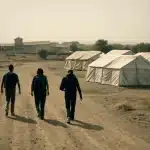
In the wake of Bashar al-Assad’s ousting, Syria’s internal strife continues to escalate, particularly in the southern province of Suwaida. Here, the situation has deteriorated significantly, leading to deadly confrontations between Bedouin and Druze communities. Recent reports from the Syrian Observatory for Human Rights indicate a tragic toll, with at least 89 individuals losing their lives in these clashes, including members from both factions and Syrian government forces.
Work revolution: Google reveals 90% of professionals are already using AI daily – are you one of them?
Gigantic 400-meter structures discovered beneath Antarctic ice spark heated debate among scientists worldwide
### Unfolding Violence in Suwaida
The conflict in Suwaida has not only pitted the Bedouin against the Druze but has also seen Syrian government forces intervene, sometimes siding with the Bedouins. This intervention has escalated the violence, which reportedly started over incidents of abductions and assaults at a local checkpoint set up by Bedouins. The checkpoint became a flashpoint when a young Druze was attacked, triggering retaliatory actions that spiraled into broader conflict.
### Israel’s Involvement in the Strife
Adding a layer of complexity to the already volatile situation, the Israeli military has launched attacks against Syrian government tanks. This intervention by Israel was explained as a response to the Syrian government’s attempts to restore order in the chaotic region. The strikes underline the broader regional implications of the conflict in Suwaida, hinting at the delicate balance of power and the fragility of peace in the area.
### Historical Context and Concerns for the Druze
The Druze community, which traces its origins back to the 11th century and diverges from mainstream Islam, has been a significant part of Syria’s cultural tapestry, especially in Suwaida. Historically, the Druze have inhabited this region along with neighboring areas in Lebanon and Israel, including the Golan Heights. Before the civil war erupted in 2011, approximately 700,000 Druze were living in Syria, making up about three percent of the population. Their unique religious and cultural identity has sometimes put them at odds with the central government and other ethnic groups, particularly under the new Islamist regime that took power after Assad’s regime fell.
### Escalation and Regional Impact
The violence in Suwaida is a grim reminder of the ongoing challenges facing Syria. Previous skirmishes in April and May had already set a precedent for the current wave of violence, indicating a pattern of recurring conflicts that not only disrupt local communities but also have the potential to inflame regional tensions. As external forces like Israel intervene, the situation could lead to a broader geopolitical conflict, drawing in more stakeholders and complicating peace efforts in the war-torn nation.
A YouTuber bought a Bugatti on TEMU expecting luxury… but the unboxing went terribly wrong
Colonizing Mars is no longer a dream: Elon Musk unveils a historic deadline that will change everything
This resurgence of violence in Suwaida underscores the fragile state of peace in Syria and highlights the precarious situation of minority communities like the Druze, who find themselves caught between larger military and political forces. With the Syrian government struggling to maintain control and external actors like Israel taking proactive military actions, the path to stability seems increasingly convoluted. As the international community watches closely, the fate of Suwaida and its residents hangs in the balance, emblematic of the broader struggle for peace and security in Syria.
Similar Posts
- Government Forces Advance in Suwaida: Key Developments on the Ground
- Trump Vows Retaliation After Attack on US Troops: What’s Next?
- Turkey’s Ambitions in Syria: Unveiling the Impact and Strategic Goals
- Security Forces “Regularly” Involved in Massacres: Shocking Revelations Unveiled!
- Thousands of Syrians Leave Turkey: Find Out Why They’re Going Back Home!

Lowell Hagan closely follows international affairs. From geopolitical conflicts to economic cooperation, he provides context to help readers better understand global dynamics. His clear, structured style gives meaning to global news.